
“Creating The Comfrey Almanac” – by Dr Gillian Jein
My name is Gillian Jein and I am the proud project lead and editor of The Comfrey Almanac.
I am Reader in French and Cultural Geography at Newcastle University, and I am also Irish,
a wife, mother, dog guardian, and a poor, but passionate, guitar player. My job involves
examining how people interact with urban space and how they make places. That means I
look at how we inhabit and affect the urban world, as well as the diverse meanings and
values we give to our experiences. With the growth of globalized and ecologically-challenged
cities, common themes in my field are migration, mobility, relation, and transition. I engage
with many kinds of source material to do this work — art and writing, architecture and
gardens — as well as listening to people and creating photographic or filmic documents. My
current research involves asking the question: What makes a good city? So I’m exploring the
power dynamics in cities that inform interactions between humans, other humans, and more-
than-humans. Above all, I am interested in the abilities of ordinary people to respond (their
“response-abilities”) to biodiversity loss and climate change, and the kinds of practices,
communities and narratives that are emerging ‘on the ground’.
The Comfrey Almanac is the result of my long-term partnership with The Comfrey
Project. It was back in 2020, while working with a colleague based at Dublin City University,
that I first came across The Comfrey Project. Dr Dervila Cooke had organised a symposium,
SeasonsPace and she asked me to invite some urban gardeners from the North East. This
is how I met Helen Collins, then a horticultural therapist with The Comfrey Project, who came
to represent The Comfrey Project at the symposium which was held at Airfield Urban Farm
in Dublin in September 2021. Helen gave a presentation on Comfrey’s work around
gardening and cooking as means to enable people to improve their psycho-social health
after having endured the profound disruptions of forced migration. At that point, I was
researching artists and community building on a Paris-based urban farm, but the pandemic
had made fieldwork impossible. I had also recently survived cancer and, coupled with the
reassessment of priorities that lockdown brought on for many of us, listening to Helen made
it feel possible to become more engaged with communities closer to home, to learn
alongside them, and perhaps contribute to making visible their diverse responses to our
shared socio-ecological challenges. I had no idea that that presentation would change my
way of thinking and working so profoundly.
I first met Eleni Venaki, The Comfrey Project’s indomitable director, in the winter of
2021. After a tour of the garden, warm welcomes from Helen and Hossein, Eleni and I
discussed possible ways to partner with the university. It emerged that Comfrey had been
talking for a while about a ‘legacy’ project; some way to enable the volunteers to document
the knowledge, expertise, and creativity of their actions at Comfrey. This idea of ‘legacy’ is
especially important for a charity like The Comfrey Project given the transience of the
community and the mobility of the volunteers. For instance, many people come to Comfrey
for a few months and then, hopefully, can move on, take a job, build a life, and forge
connections with their new communities. This has a number of important implications: first, it
means that the cultural backgrounds of the volunteers are often indicators of major
upheavals in specific parts of the world at any one time — wars, conflict or, increasingly,
climate events. The Comfrey Project’s community is, in some ways, a microcosmic reflection
of world events, at the same time as it brings people from different cultures together in new,
historically and geographically specific ways. Windmill Hills is a translocal site. Comfrey’s
guiding values for dealing with such a complex, diverse and often traumatised community
are based in empathy, hospitality and mutual care. All of which are proven to be foundation
stones to individual and community wellbeing, and to the broader fabric of urban society.
Second, the transience of Comfrey’s community is, in many ways, a sign that the charity is
successful in its aim to support people’s transition to their new home. People get the support
they need for as long as they need it. While I had come to learn how gardening helped
support mental health and emotional recovery, therefore, I quickly recognised the numerous
other — social and ecological — ways in which The Comfrey Project enables people to
rebuild their lives. Whether this be through English language classes, horticultural courses,
cooking, social events, or educating people about access to legal, medical and social
support services. Volunteers at Comfrey are supported to become ambassadors for their
communities, to work across their respective cultures, enabling each other. The abstract
values of conviviality and care matter and become real through these practices. The
question, then, became how to collaboratively represent this convivial, vibrant part of the
world: how could we harness together in a single book the complexity of The Comfrey
Project and the diverse knowledge, expertise and experiences of its volunteers?
It was the wonderful Nicola Bushell, one of The Comfrey Project’s Session Coordinators, who first
suggested an Almanac as the collaborative model. After organising an initial workshop with
artist Sara Cooper in 2022 on gardening and storytelling, I was fortunate enough to be
awarded a six-month Knowledge Exchange sabbatical to work alongside Comfrey in the
spring of 2023. This was vital in building relationships with the volunteers, in understanding
their priorities and in shaping a project to work for them. One method we used was to erect
on a wall in the Windmill Hills centre, a large noticeboard dedicated to what quickly became
known as ‘The Comfrey Almanac’ project. We divided the noticeboard into categories
corresponding to the different sections of the proposed book: important days; gardening
tasks; recipes; wellbeing tips; stories; animals/plants. The idea was to enable people to
engage with the Almanac project in their own time, whether or not I was on site, and to
ensure that even if people could not attend a workshop or dedicated activity, they could still
participate in the compendium the book became. I kept a field notebook, participated in
conversations, activities, events, all while having the privilege to get to know people, work
alongside them, and build friendships with individuals who have become very dear to me
over the years. I photographed excessively, and interviewed a number of the long-standing
volunteers who have become community leaders or business owners through their initial
work with the Comfrey. I was fortunate to meet and interview The Comfrey’s founder, Mandy
Jetter. With the amazing support of the archives team at Gateshead Central Library, I was
able to trace a history of the land at Windmill Hills. All of these contributions, vast and varied,
now needed to be organised into a book.
This was developed through a creative programme of activities led by locally-based
artists and facilitators: textile-based mapping and photography with Ronan Devlin and Sara
Cooper; anthotype printing with Dominic Smith; and story-sharing workshops with Ruth
Brickland, as well as poetry sessions and conversations with myself. These sessions gave
space for volunteers to contribute knowledge, ideas, memories and imagination — affirming
that this garden is as much about storytelling as it is about sowing.
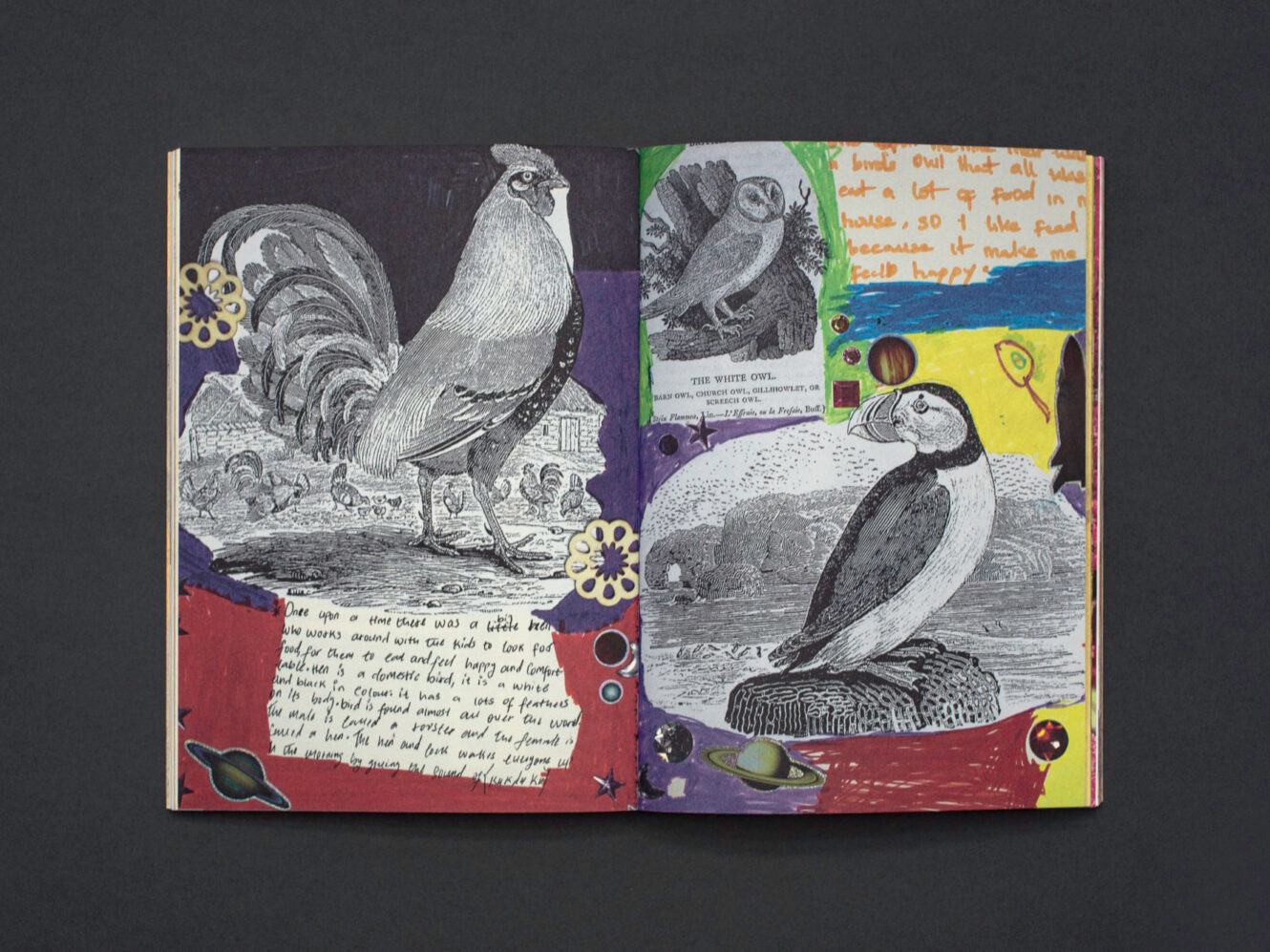
The result of all of these many, many hands is The Comfrey Almanac, a beautifully
crafted seasonal garden guide and cultural companion — grown from the soil of a
Gateshead community garden and shaped by people who, in turn, grow there. It offers the
reader month-by-month guidance on permacultural gardening, recipes and seasonal
celebrations from around the world, herbal remedies, sustainable living, and easy nature-
based wellbeing. Across its pages, we hear from volunteers, artists, and Comfrey staff who
have worked side by side. Illustrated with photographs and original artworks made by The
Comfrey Project volunteers, it is both a practical resource and a celebration of resilient,
creative, ecological community-making. Through this book, we hope it becomes clear that
culture is not a static inheritance, that meaning and community are always in process, living
and dynamically exchanged: expressed by the plants nurtured, the meals shared, and the
rituals carried across time and place. Nor are land and nature passive backdrops in this
almanac, but vital, responsive presences — that shape and are shaped by the people who
grow for and with them. Volunteers have described the Comfrey garden as a refuge, as
home: a place to breathe, to be recognised, to connect. In this sense, The Comfrey Almanac
is more than a gardening manual. It is a document of ecological and social resilience, a
contribution to our understanding of home-making in unfamiliar lands, and a testimony to the
power of community when grounded in mutual respect, compassion, and empathy. Above
all, we hope The Comfrey Almanac is one way of sharing the incredible knowledge,
creativity, and expertise of Comfrey Project volunteers from around the world and a way to
enable more of us to respond positively, with hope and with care, to the shared challenges
we collectively face.
This project was made possible by the generous support of individual donors and
institutions. We especially thank the crowdfunding contributors: Penny Schofield, Rachael
Brien, Jeremy Hofmeister Mac Lynn, Heart & Parcel, Ashley Shield, Lily Kroese, Alison Bray,
Mary McGrory, Ailsa Rutter OBE, Helen Raffle, Conor Clarke, and Peter Jackson.
Funding was also provided by:
North East Combined Authority
The School of Modern Languages at Newcastle University
Newcastle University Humanities Institute
Newcastle University Centre for Researching Cities
Economic and Social Research Council (Impact Accelerator Account)
To purchase a copy of the book and support this wonderful community in Gateshead you can follow this link